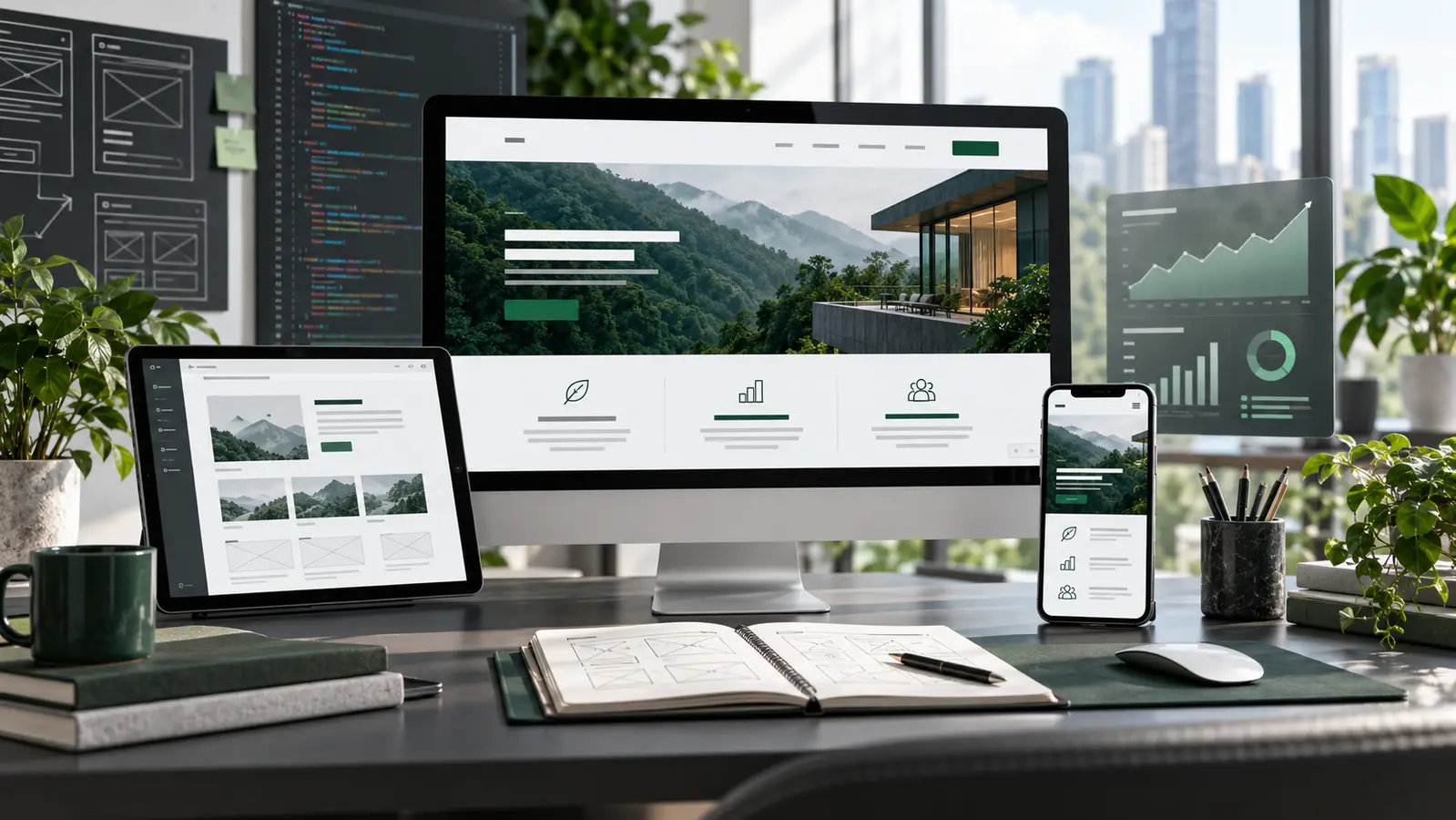

In 2026, a website is more than just an online presence—it is an important part of your business growth strategy. Customers use websites to discover businesses, compare services, check credibility, make purchases, and contact companies. A well-developed website can help businesses generate leads, improve brand credibility, increase search visibility, and deliver a better customer experience. Whether you are a startup, small business, e-commerce company, or established enterprise, understanding website development can help you make better decisions about your online presence. In this ultimate guide, we will explain what website development is, why it matters, the different types of websites, essential features, the development process, technologies, SEO, AI, costs, common mistakes, and future trends.
What Is Website Development?
Website development is the process of creating, building, testing, maintaining, and improving a website. It includes everything from developing the structure and functionality of a website to making sure it works properly across different devices.
Professional website design and development involves several areas, including front-end development, back-end development, databases, security, performance, and user experience.
Website development generally includes three major areas:
Front-End Development
Front-end development focuses on everything users see and interact with on a website. It includes:
- Website layout
- Navigation menus
- Buttons
- Images and videos
- Forms
- Typography
- Animations
- Responsive design
Common front-end technologies include HTML, CSS, JavaScript, React, and Next.js.
Back-End Development
Back-end development handles the functionality that works behind the scenes. It can include:
- Databases
- User authentication
- Server-side logic
- APIs
- Payment processing
- Data management
- Security
Common back-end technologies include Node.js, Python, PHP, Java, and .NET.
Full-Stack Development
Full-stack development combines both front-end and back-end development. For example, an e-commerce website may require: Front-end: Product pages, shopping cart, and checkout interface Back-end: Product database, customer accounts, orders, and payment processing. Therefore, professional website development services involve much more than simply designing web pages.
Why Website Development Is Important for Businesses in 2026
A professional website can directly support business growth. In a competitive digital environment, customers often expect businesses to have a fast, mobile-friendly, trustworthy online presence.
Build Brand Credibility
A professionally developed website can make your business appear more trustworthy and established. Customers can easily find:
- Company information
- Services
- Products
- Customer reviews
- Contact details
- Portfolio
- Case studies
Generate More Leads
Your website can work as a lead-generation channel 24/7. For example, a service business can use: Landing Page → Contact Form → Lead → Sales Team. A well-planned business website development strategy can turn website visitors into potential customers by providing clear information and strong calls-to-action.
Improve Search Visibility
A technically optimized website gives search engines better access to your content. This can support your SEO strategy and help your pages appear for relevant searches.
Reach Mobile Users
Many customers access websites through smartphones. A responsive website automatically adapts its layout to different screen sizes.
Improve Customer Experience
Fast loading pages, simple navigation, clear information, and easy contact options can make it easier for visitors to become customers.
Support Digital Marketing
Your website is the central destination for many marketing campaigns. For example: Google Ads → Landing Page → Lead Form → Sales Team Social Media → Website → Service Page → Customer SEO → Blog → Service Page → Lead. For businesses looking for a complete digital presence, website development can work alongside SEO, digital marketing services, and other online growth strategies.
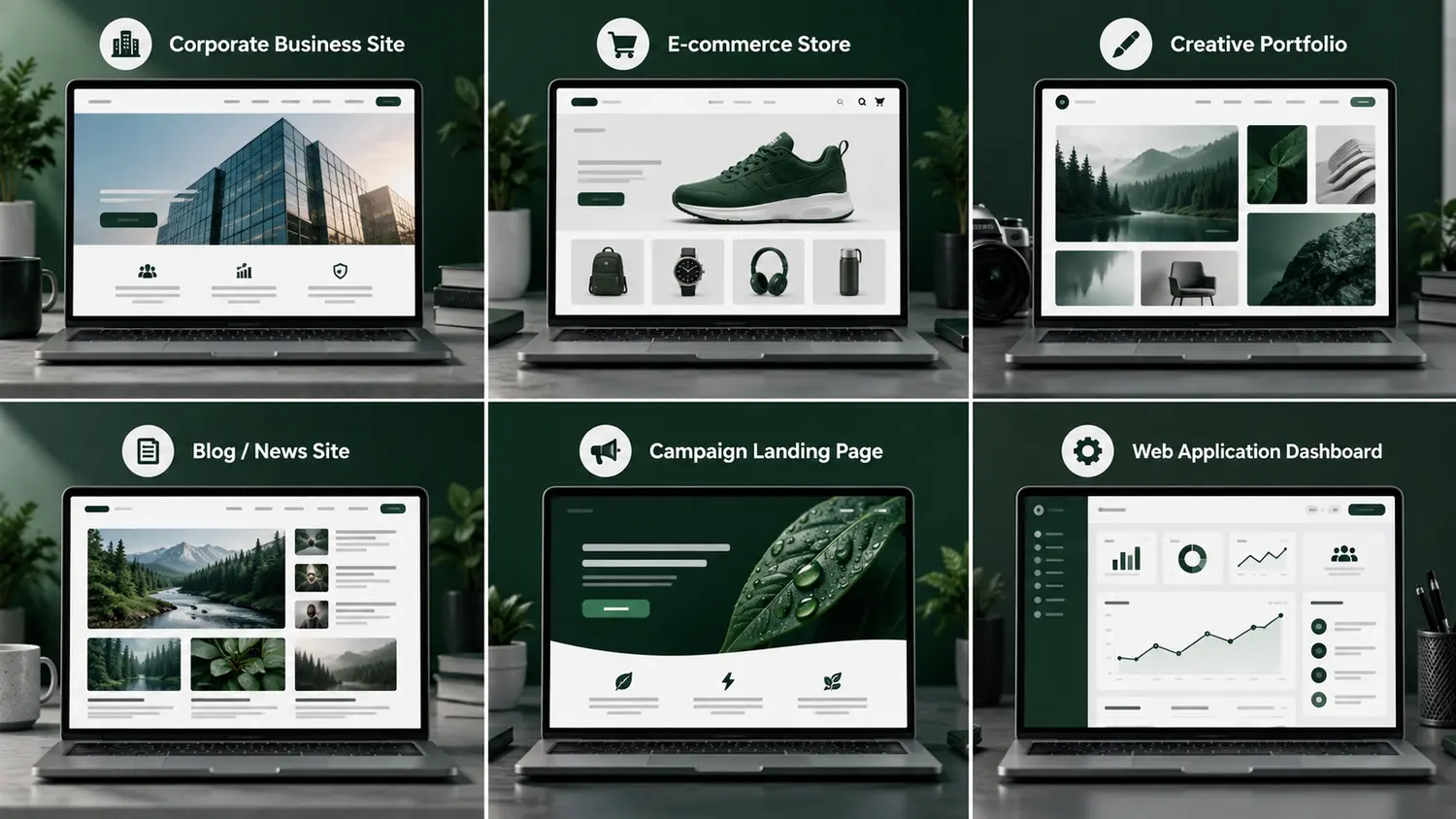
Types of Websites Businesses Can Develop
Different businesses require different types of websites.
Business Website
A business website introduces your company, services, products, team, and contact information. For example, a technology company may have pages for its services, industries, case studies, about us, and contact information.
E-Commerce Website
An e-commerce website allows customers to browse products and purchase them online. Important features include:
- Product listings
- Shopping cart
- Checkout
- Payment gateway
- Customer accounts
- Order tracking
Portfolio Website
Portfolio websites are commonly used by designers, developers, photographers, architects, freelancers, and creative professionals to showcase their work. You can review a company's completed projects to understand its capabilities.
Blog Website
A blog focuses primarily on publishing informational content. Businesses can use blogs to educate customers, answer questions, target relevant keywords, and attract organic search traffic.
Landing Page
A landing page is designed around a specific marketing goal. For example: Google Ad → Landing Page → Lead Form → Conversion. Landing pages are particularly useful for businesses running paid advertising campaigns.
Web Application
A web application provides interactive functionality through a browser. Businesses with complex workflows can also consider custom software development for tailored functionality. Examples include:
- Online booking systems
- Customer portals
- Learning platforms
- CRM systems
- Project management applications
The right type of website depends on your business goals, target audience, budget, and functionality requirements.
Essential Features of a Modern Business Website
A modern website should not only look attractive. It should also be fast, secure, accessible, and easy to use.
1. Responsive Design
Your website should work properly on:
- Smartphones
- Tablets
- Laptops
- Desktop computers
Responsive website development ensures that users receive a consistent experience across different devices.
2. Fast Loading Speed
Visitors may leave a website if pages take too long to load. Optimize:
- Images
- CSS
- JavaScript
- Fonts
- Server response
- Third-party scripts
3. Simple Navigation
Visitors should quickly understand where they need to go. Use clear navigation such as: Home | About | Services | Blog | Contact
4. Clear Calls-to-Action
Examples include:
- Get a Quote
- Contact Us
- Book a Consultation
- Buy Now
- Request a Demo
5. Strong Security
Businesses should use security measures such as:
- HTTPS
- Secure authentication
- Regular software updates
- Secure databases
- Access controls
- Backups
6. SEO-Friendly Structure
A modern website should have:
- SEO-friendly URLs
- Proper heading structure
- Meta titles and descriptions
- Internal linking
- XML sitemap
- Robots.txt
- Structured data where appropriate
7. Analytics Integration
Tools such as Google Analytics and Google Search Console can help businesses understand website performance, user behavior, and search visibility.
Website Development Process: Step-by-Step
Professional website development usually follows a structured process.
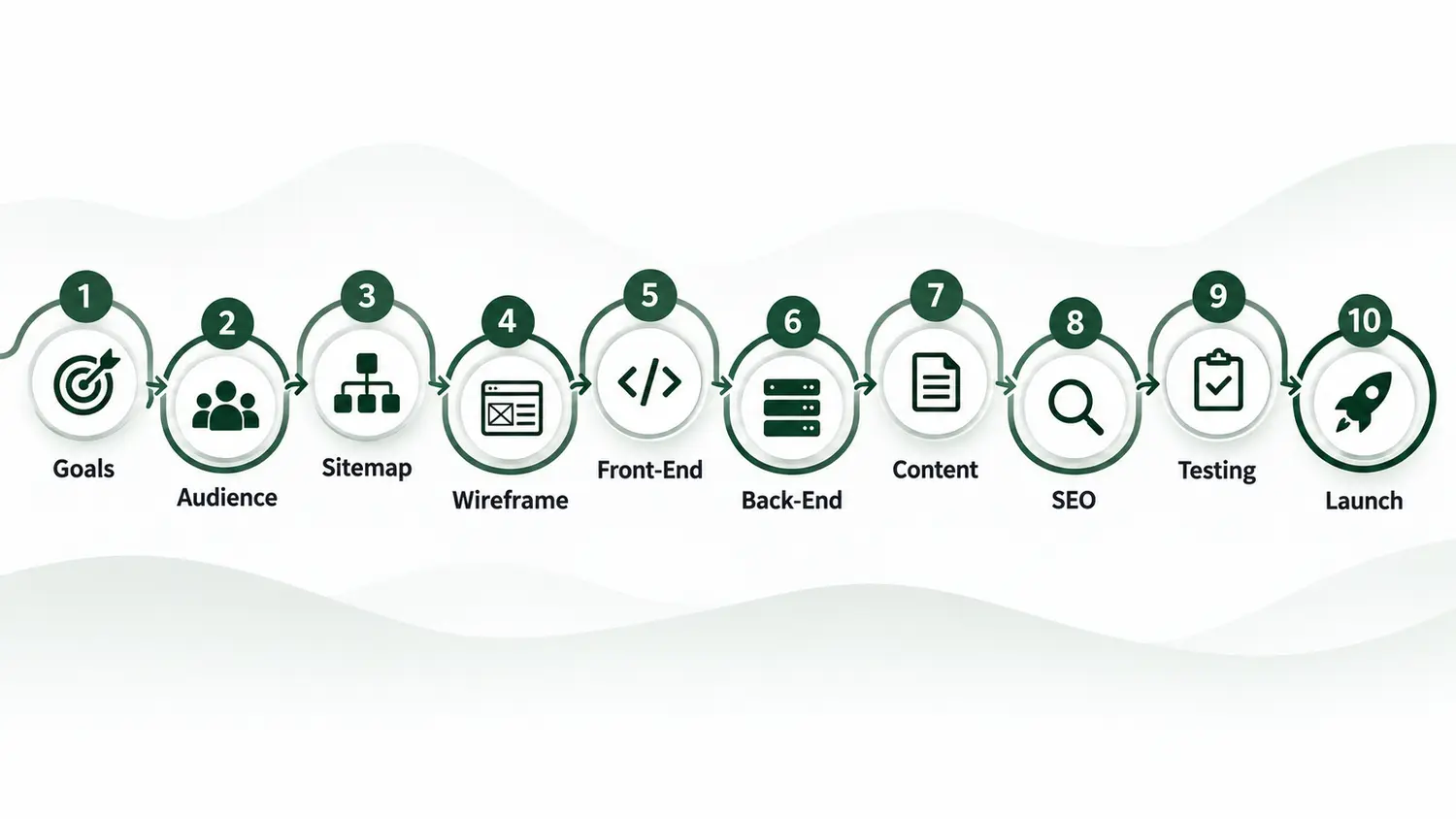
Step 1: Define Business Goals
First, identify what the website needs to achieve. For example:
- Generate leads
- Sell products
- Increase bookings
- Build brand awareness
- Provide information
Step 2: Research the Target Audience
Understand:
- Who your customers are
- What they are searching for
- What problems they have
- What information they need
- What actions you want them to take
Step 3: Plan the Website Structure
Create a sitemap that defines the main pages. For example: Home → About → Services → Individual Service Pages → Blog → Contact. A clear website structure is also important for SEO and user navigation.
Step 4: Create Wireframes and Design
The design team creates the visual structure of the website. This includes:
- Layout
- Colors
- Typography
- Navigation
- Buttons
- Content placement
Step 5: Front-End Development
Developers convert the design into a functional interface using technologies such as HTML, CSS, JavaScript, React, or other frameworks.
Step 6: Back-End Development
If the website requires dynamic functionality, developers build the back-end systems, APIs, databases, authentication, and other functionality.
Step 7: Add Content
Add:
- Website copy
- Images
- Videos
- Product information
- Service descriptions
- Blog content
Content should be useful to visitors and aligned with the overall SEO strategy.
Step 8: SEO Implementation
Implement technical and on-page SEO before launch. This includes meta tags, heading structure, internal links, image optimization, XML sitemap, Robots.txt, and SEO-friendly URLs.
Step 9: Testing
Test the website for:
- Mobile responsiveness
- Browser compatibility
- Broken links
- Forms
- Page speed
- Security
- Functionality
Step 10: Launch and Maintenance
After successful testing, the website is deployed. However, development does not end at launch. Regular maintenance, security updates, content improvements, and performance monitoring are important for long-term website success.
Best Technologies for Website Development in 2026
The right technology depends on the website's requirements, budget, scalability, and functionality.
HTML, CSS and JavaScript
These remain fundamental technologies for web development.
React
React is widely used for building interactive user interfaces and modern web applications.
Next.js
Next.js provides capabilities useful for modern web applications, including server-side rendering and static generation.
Node.js
Node.js allows developers to build server-side applications using JavaScript.
Python
Python is commonly used for back-end development, automation, data processing, and AI-related applications.
PHP
PHP continues to be used for many websites and content management systems.
WordPress
WordPress can be a practical choice for businesses that need a content-focused website and want to manage content without extensive development knowledge.
Headless CMS
A headless CMS separates content management from the front-end presentation layer, providing flexibility for businesses managing content across multiple channels. The best technology is not necessarily the newest technology. Businesses should choose technology based on their actual requirements, scalability, budget, and long-term goals. For businesses looking for custom website development, working with an experienced technology partner such as ECOG Core Technologies can help in selecting a suitable development approach based on business requirements.
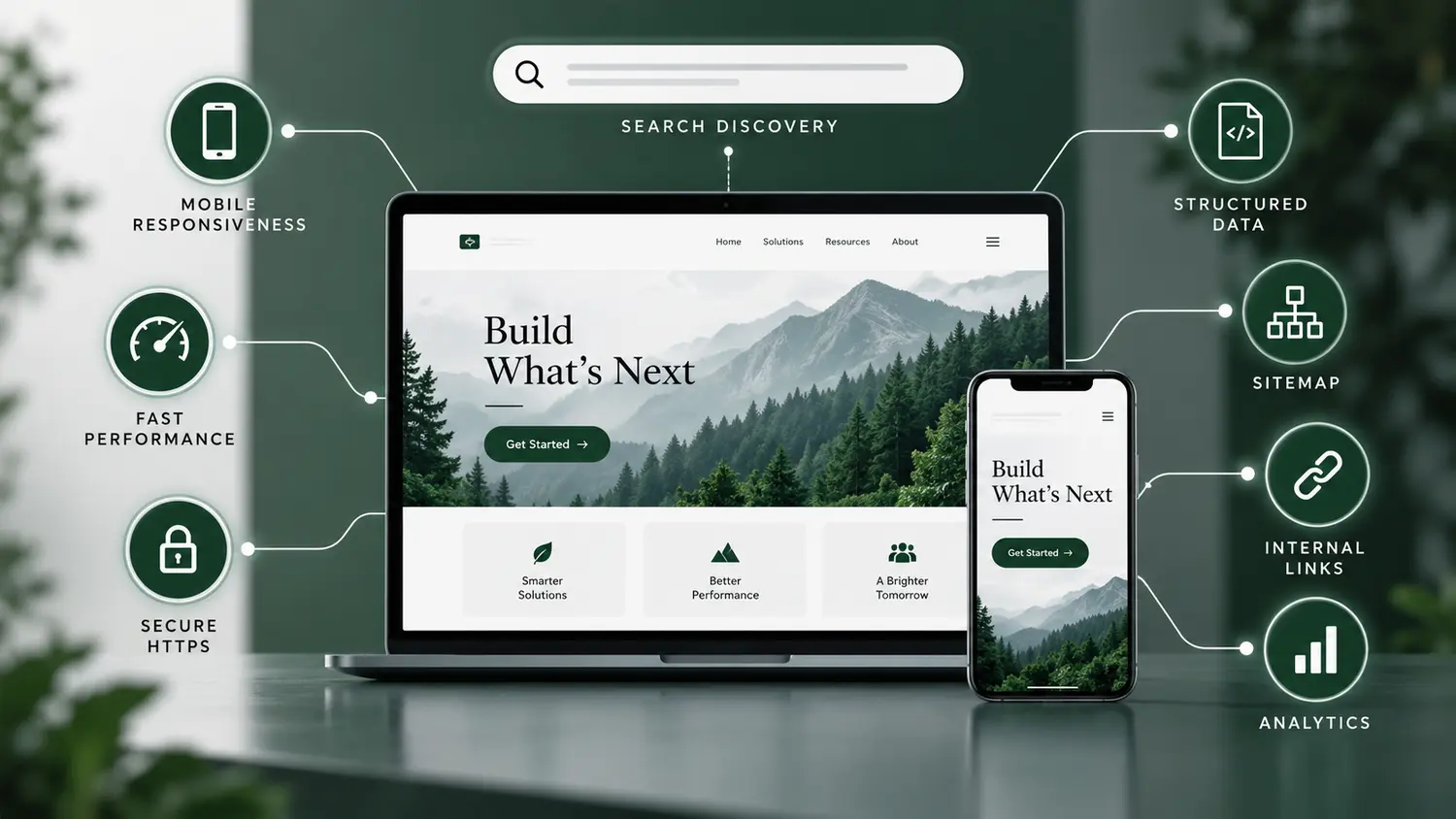
Website Development and SEO
Website development and SEO should work together from the beginning. A website may have excellent content, but technical problems can make it difficult for search engines and users to access.
Important SEO Development Factors
Mobile-Friendly Design
Your website should provide a good experience across mobile devices.
Website Speed
Optimize images, code, scripts, caching, and server performance.
Crawlability
Search engines need to be able to discover and access important pages.
SEO-Friendly URLs
Use simple and descriptive URLs. Example:
example.com/website-development-servicesis generally clearer than:
example.com/page?id=123Internal Linking
Connect relevant pages to help users and search engines discover related content.
Structured Data
Where applicable, structured data can help search engines understand information on your pages.
Core Web Vitals
Pay attention to Google's Core Web Vitals and the recommendations in the official Google SEO guide for web developers, including:
- LCP – Loading performance
- INP – Responsiveness
- CLS – Visual stability
A strong SEO-friendly website development approach creates a better technical foundation for long-term organic visibility.
How AI Is Changing Website Development in 2026
AI is increasingly becoming part of modern website development workflows. Developers and businesses can use AI to assist with:

Content Creation
AI tools can help generate initial drafts, product descriptions, FAQs, and other content.
Code Assistance
AI coding tools can help developers write, explain, debug, and improve code.
Personalization
AI can help businesses provide more personalized website experiences based on user behavior and preferences.
Chatbots
AI-powered chatbots can answer common questions and help customers find information.
Testing
AI-assisted tools can help identify potential bugs, usability issues, and testing scenarios.
SEO Support
AI can assist with tasks such as:
- Keyword research
- Content ideas
- Content optimization
- Topic clustering
- Competitor analysis
However, businesses should treat AI as an assistant rather than a complete replacement for developers, designers, marketers, and SEO professionals. Human review is still important for accuracy, quality, security, brand voice, and user experience.
How Much Does Website Development Cost in 2026?
Website development costs can vary significantly depending on the project's requirements. The total cost can depend on:
- Website type
- Number of pages
- Design complexity
- Development technology
- E-commerce functionality
- Integrations
- Content requirements
- SEO requirements
- Security requirements
- Maintenance
A simple business website may cost considerably less than a large e-commerce platform or custom web application.
Typical Cost Factors
| Website Type | Cost Level |
|---|---|
| Basic Business Website | Low |
| Professional Business Website | Medium |
| E-Commerce Website | Medium–High |
| Custom Web Application | High |
| Enterprise Website | High |
Instead of selecting a development company based only on the lowest price, businesses should consider quality, scalability, security, SEO, performance, and long-term maintenance.
The right investment should support the company's long-term digital goals.
Common Website Development Mistakes to Avoid
Avoiding common mistakes can save businesses time and money.
1. Not Defining Goals
A website without clear objectives can become difficult to measure.
2. Ignoring Mobile Users
A website that works well only on desktops can lose potential customers.
3. Slow Loading Pages
Large images, unnecessary scripts, and poor hosting can negatively affect performance.
4. Poor Navigation
Visitors should not have to search extensively to find important information.
5. Ignoring SEO
Building a website without SEO considerations can make it harder to gain organic visibility.
6. Weak Security
Security should be considered throughout development and maintenance.
7. No Clear CTA
Visitors should understand what action they can take next.
8. Not Testing the Website
Always test forms, links, navigation, responsiveness, speed, and important functionality before launch.
9. Forgetting Website Maintenance
Websites require ongoing updates and monitoring after launch.
How to Choose the Right Website Development Company
Choosing the right website development company is an important business decision. Before hiring a development company, consider the following:
Check Their Portfolio
Look at previous projects and determine whether their design and development quality matches your expectations.
Understand Their Development Process
Ask how they handle:
- Planning
- Design
- Development
- Testing
- SEO
- Deployment
- Maintenance
Check Technical Expertise
Make sure the company has experience with the technologies required for your project.
Ask About SEO
Your website should be developed with SEO in mind from the beginning.
Discuss Security
Ask how they handle website security, backups, updates, and data protection.
Understand the Pricing
Get a clear breakdown of:
- Development cost
- Hosting
- Domain
- Maintenance
- Third-party integrations
- Future updates
Consider Long-Term Support
A good development partner should be able to support your website after launch.
For businesses looking for technology and digital solutions, ECOG Core Technologies provides services designed to help businesses strengthen their digital presence and technology capabilities. You can learn more about their services through the official ECOG Core Technologies website.
Future Trends in Website Development
Website development will continue to evolve as technology and customer expectations change. Some important trends include:
AI-Powered Development
AI will increasingly assist developers with coding, testing, content, and optimization.
Voice and Conversational Interfaces
Businesses may increasingly use conversational interfaces to help users interact with websites.
Progressive Web Experiences
Web experiences will continue becoming faster, more interactive, and app-like.
Personalization
Businesses will increasingly customize website experiences according to user needs and behavior.
Headless Architecture
Businesses that need flexible content delivery across websites, applications, and other platforms may adopt headless approaches.
Stronger Web Security
As cyber threats evolve, security will remain a major priority.
Performance-Focused Development
Fast, accessible, and efficient websites will remain important for both user experience and business performance.
Website Development Checklist for Businesses
Before launching your website, use this checklist:
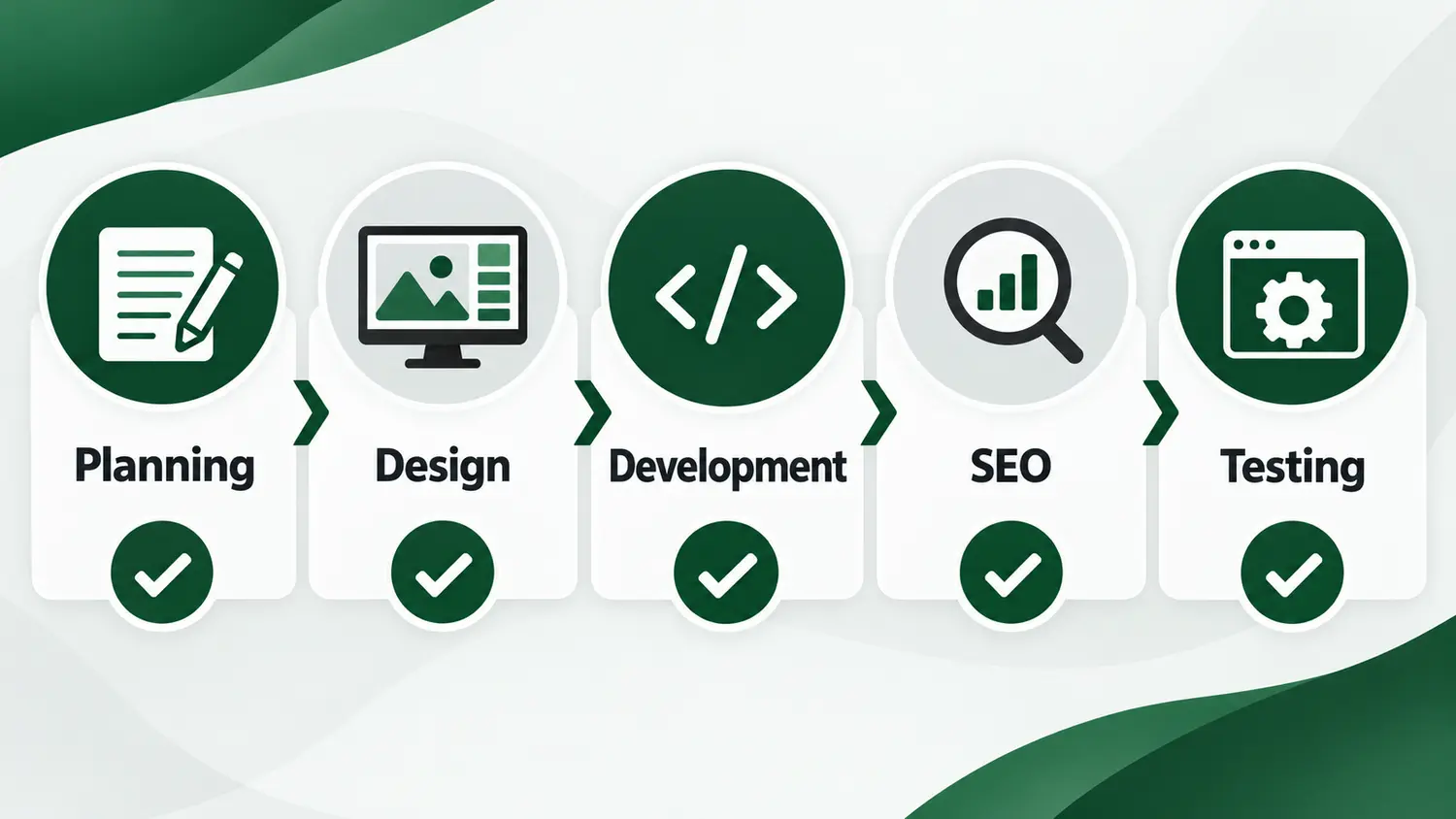
Planning
- Define business goals
- Identify target audience
- Research competitors
- Plan website structure
- Define required features
Design
- Responsive design
- Clear navigation
- Consistent branding
- Clear calls-to-action
- Mobile-friendly interface
Development
- Fast loading performance
- Secure HTTPS
- Functional forms
- Working navigation
- Browser compatibility
- Error handling
SEO
- SEO-friendly URLs
- Meta titles
- Meta descriptions
- Proper heading structure
- Internal links
- XML sitemap
- Robots.txt
- Image optimization
- Structured data where appropriate
Testing
- Test on mobile
- Test on desktop
- Check broken links
- Test forms
- Check page speed
- Check accessibility
- Check security
After Launch
- Set up analytics
- Monitor search performance
- Update content
- Apply security updates
- Create regular backups
- Monitor website performance
Conclusion
Website development is an essential part of building a successful digital presence in 2026. A modern business website should do more than look professional—it should be fast, secure, mobile-friendly, SEO-friendly, user-focused, and designed around clear business goals. From planning and design to development, SEO, testing, and maintenance, every stage can influence the website's performance and business results. For businesses planning a new website or upgrading an existing one, choosing the right website development company and technology can make a significant difference in long-term digital growth. ECOG Core Technologies helps businesses explore technology and digital solutions designed around their business requirements. If your business is planning custom website development, responsive website development, or an SEO-friendly business website, you can explore the solutions available from ECOG Core Technologies. A successful website is not just a digital address—it is a long-term business growth asset.
 Why Businesses Need Zoho Consulting Services in 2026: Benefits, Solutions & Business Impact
 Why Software Development Is Important for Businesses in 2026: Benefits, Trends & Business Impact
Comments
No approved comments yet. Start the conversation.